
Rouge-lite
Solo show at Elektrohalle Rhomberg, 18.09.-31.11.2026
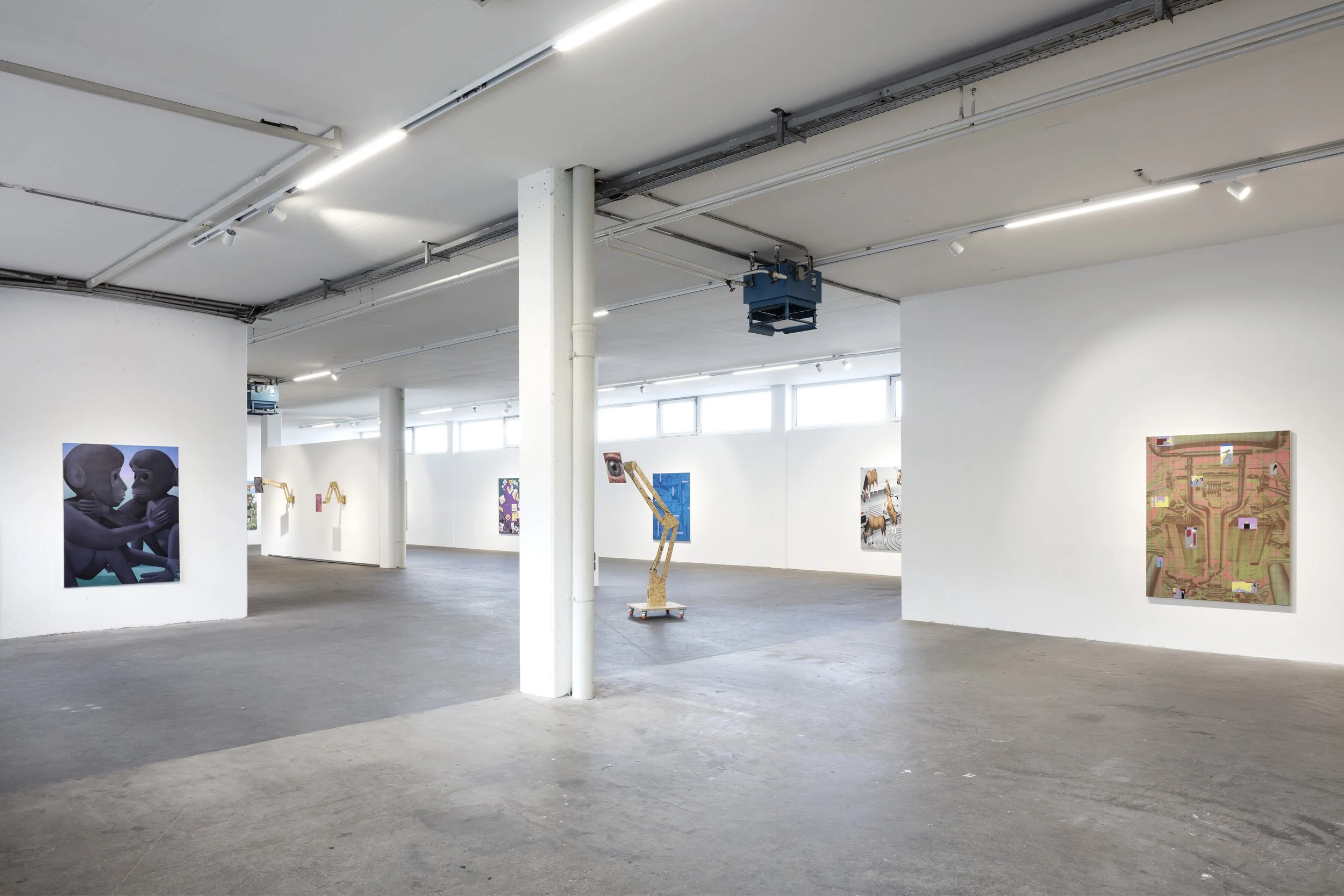
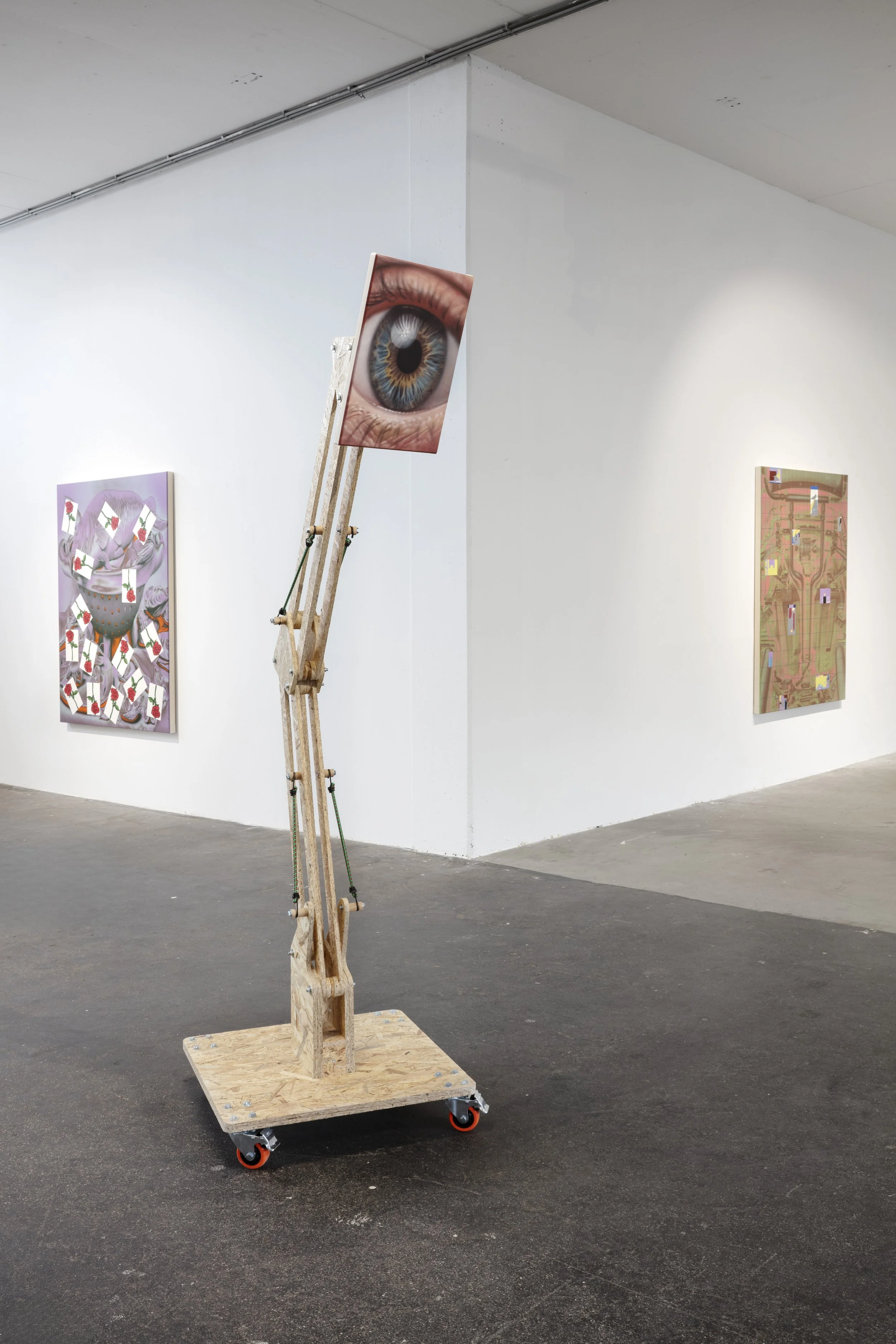
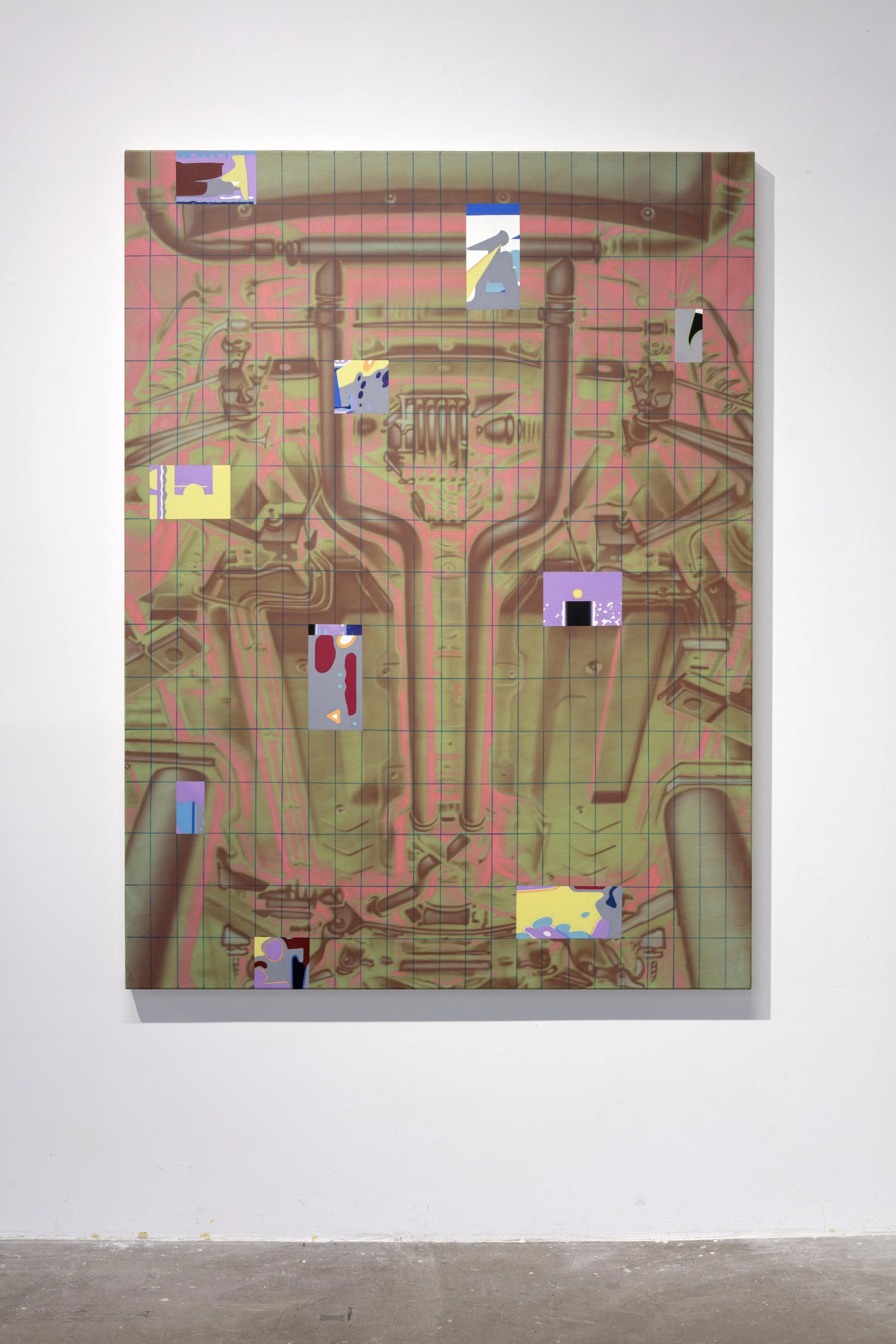
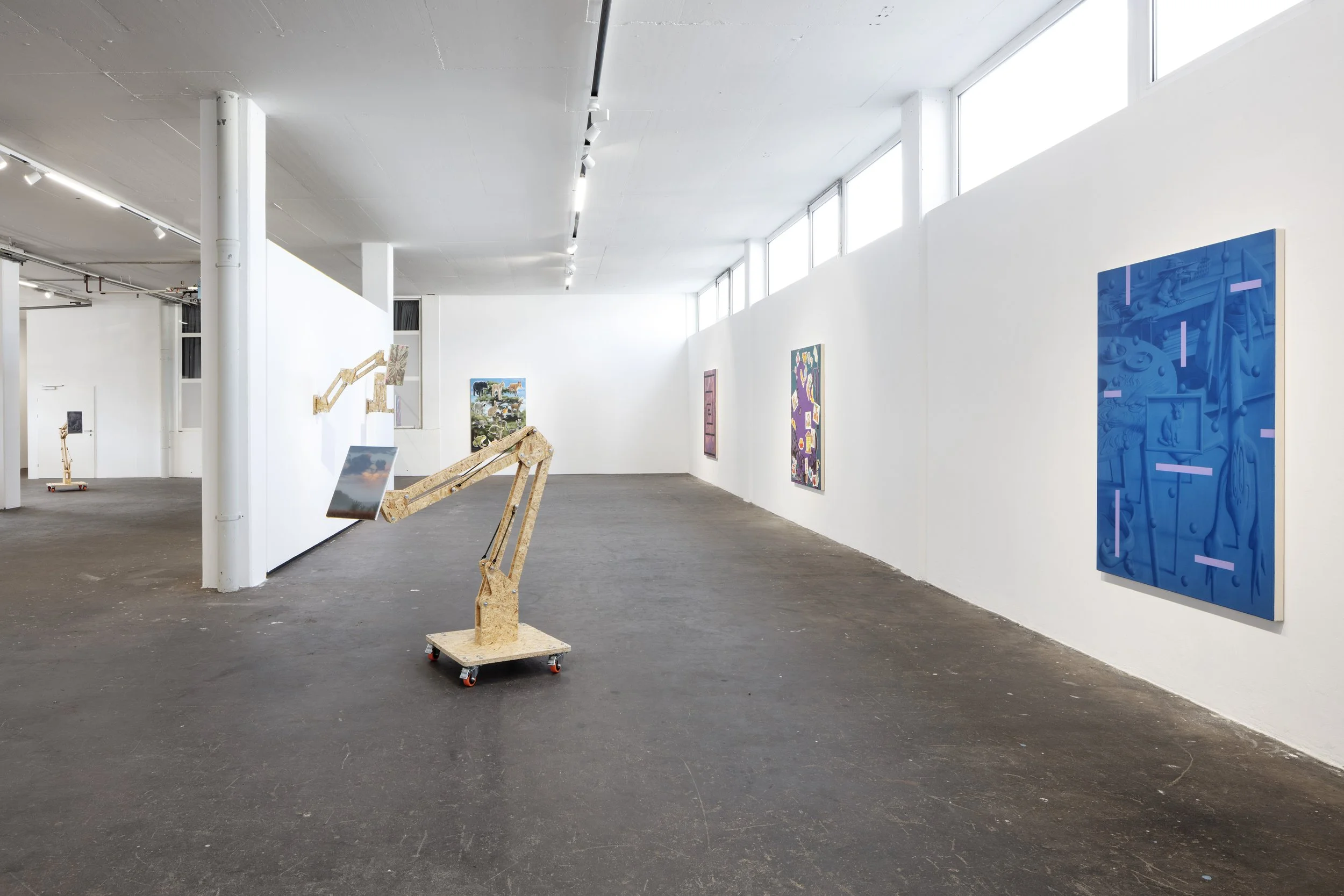
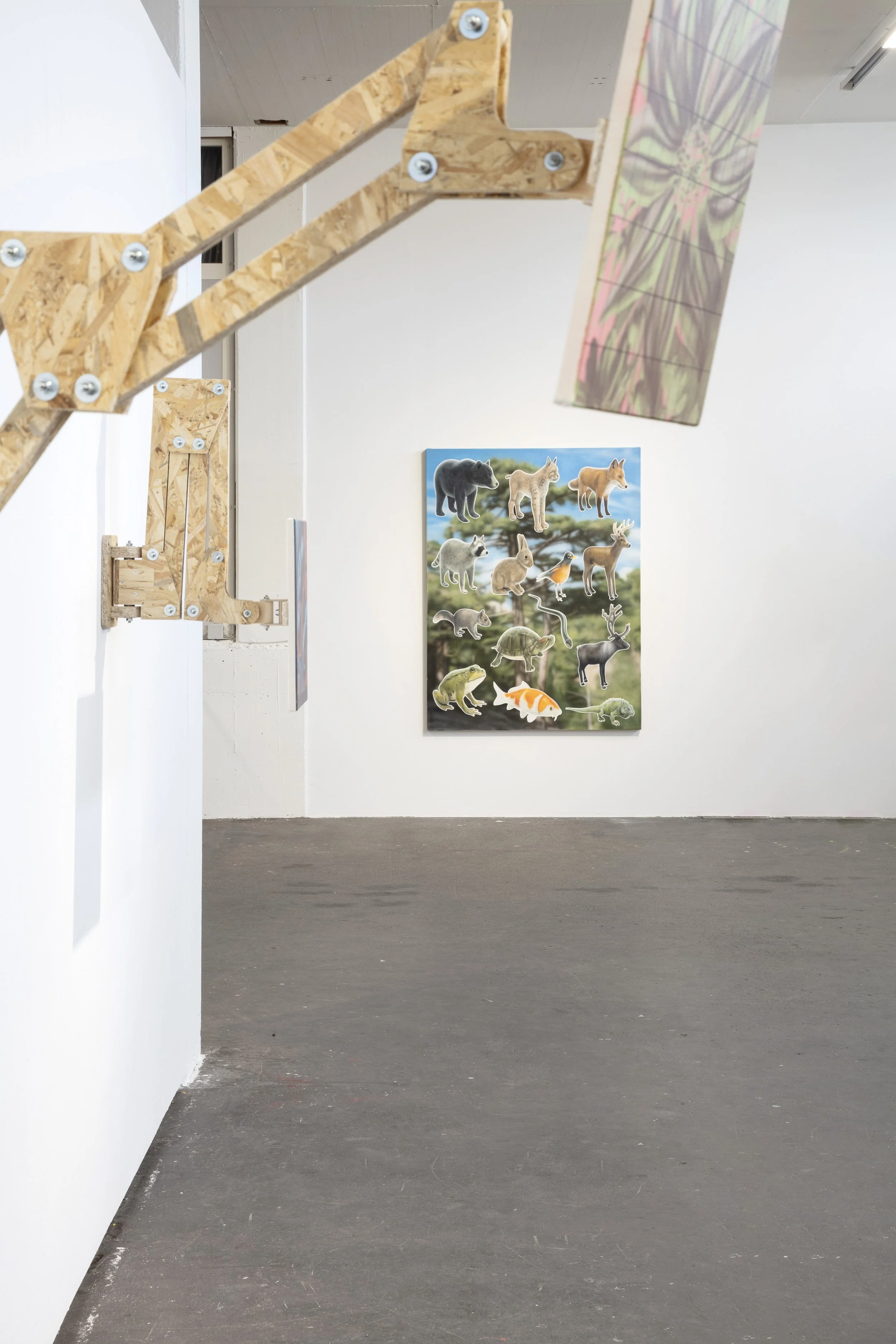
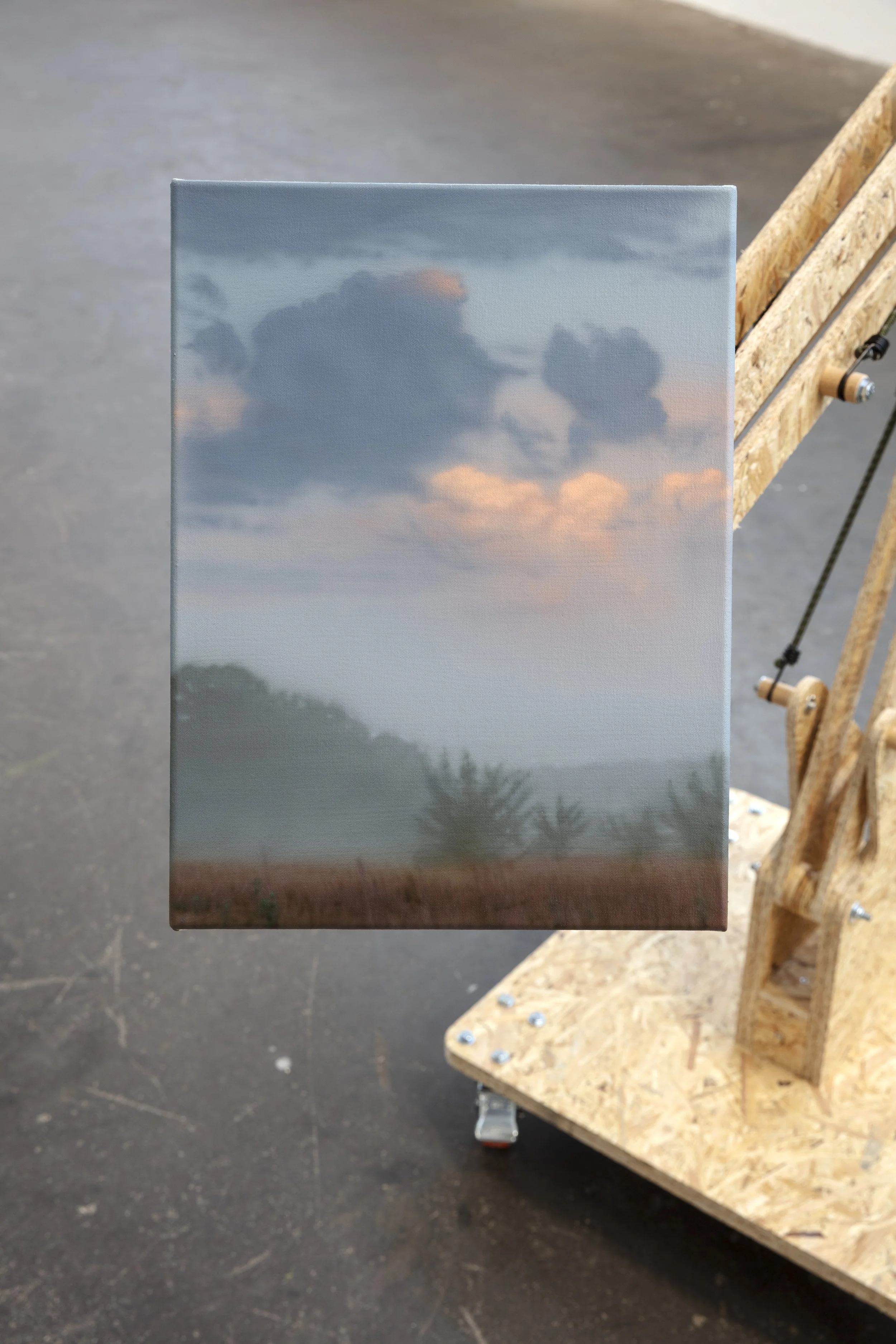
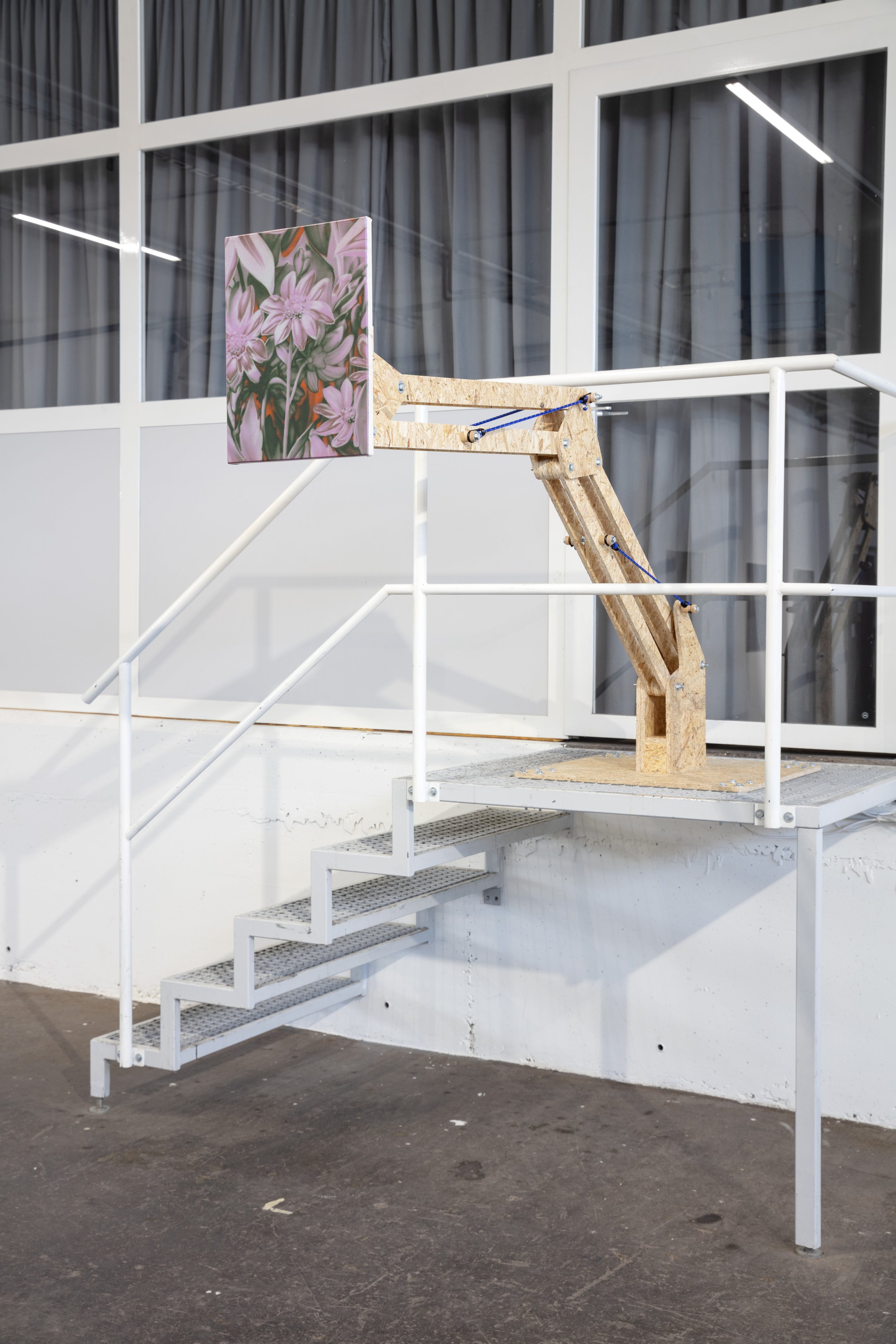
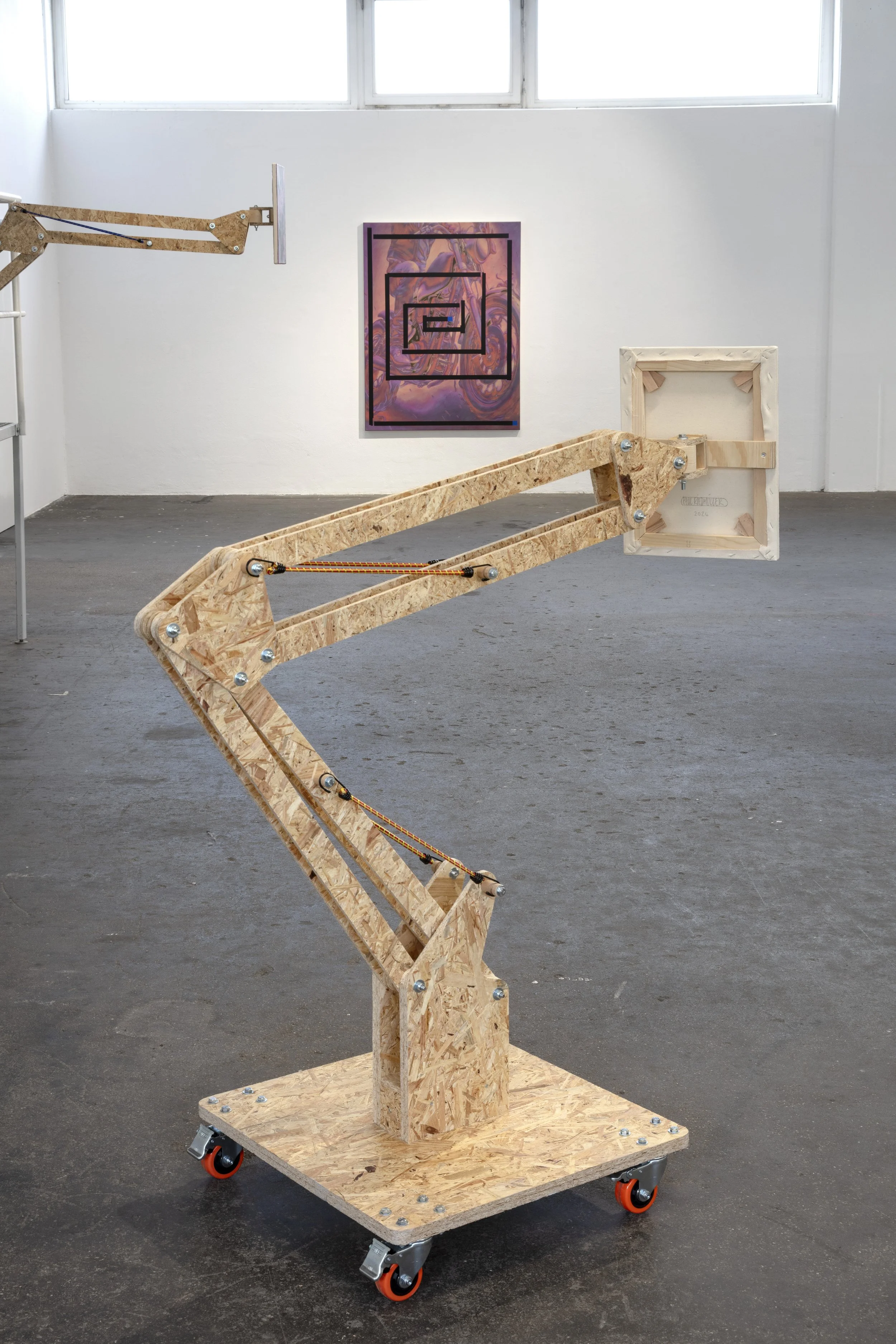
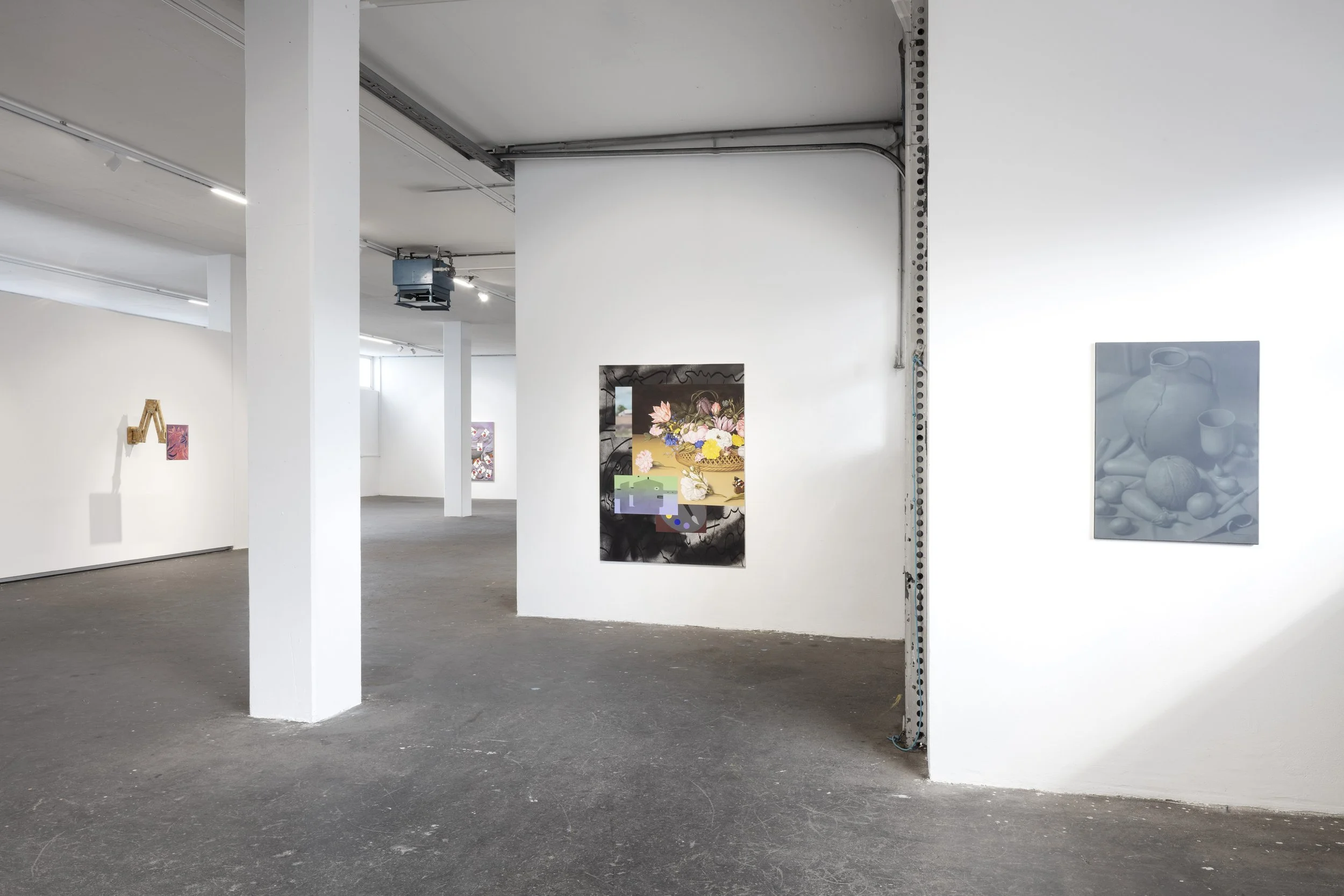
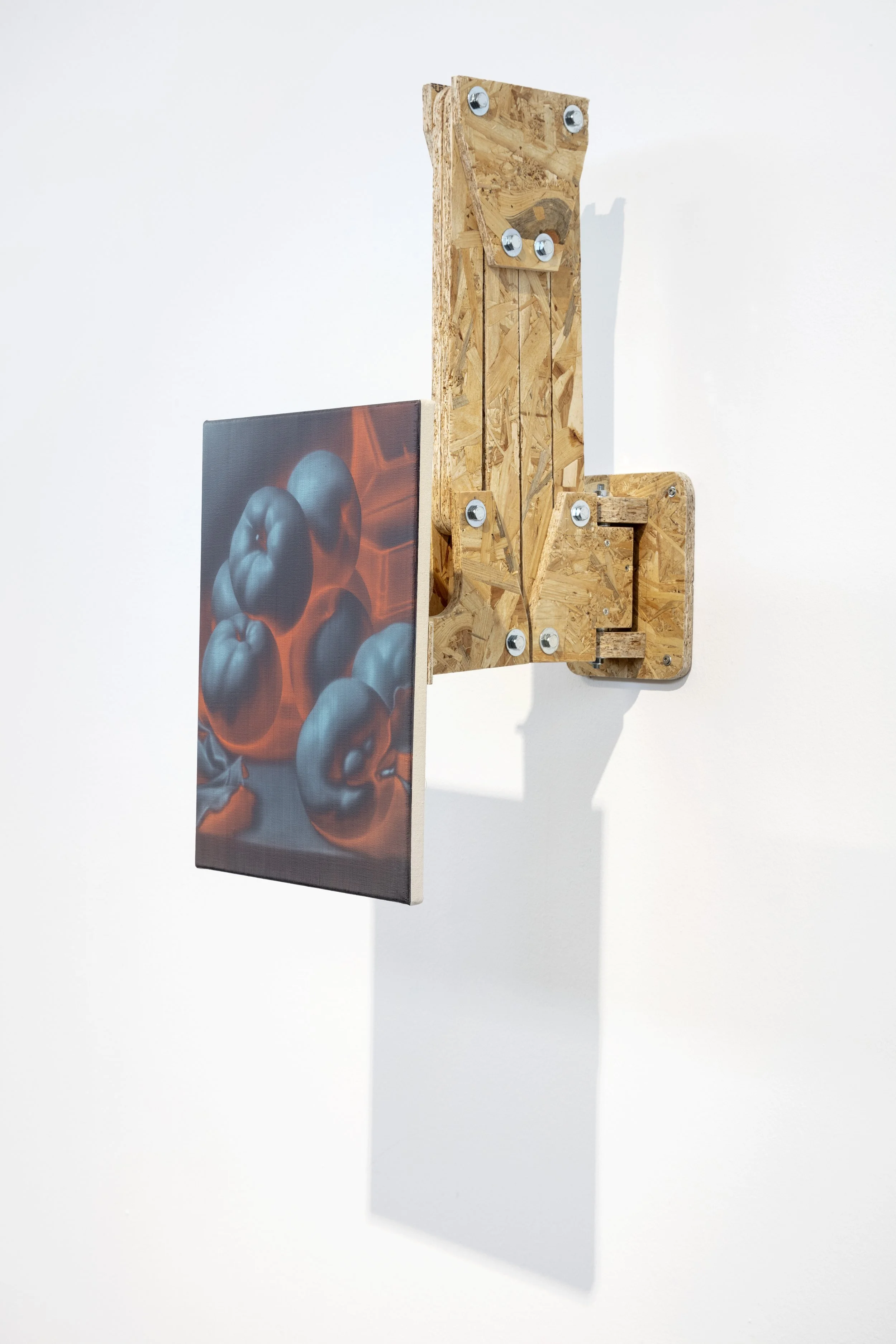
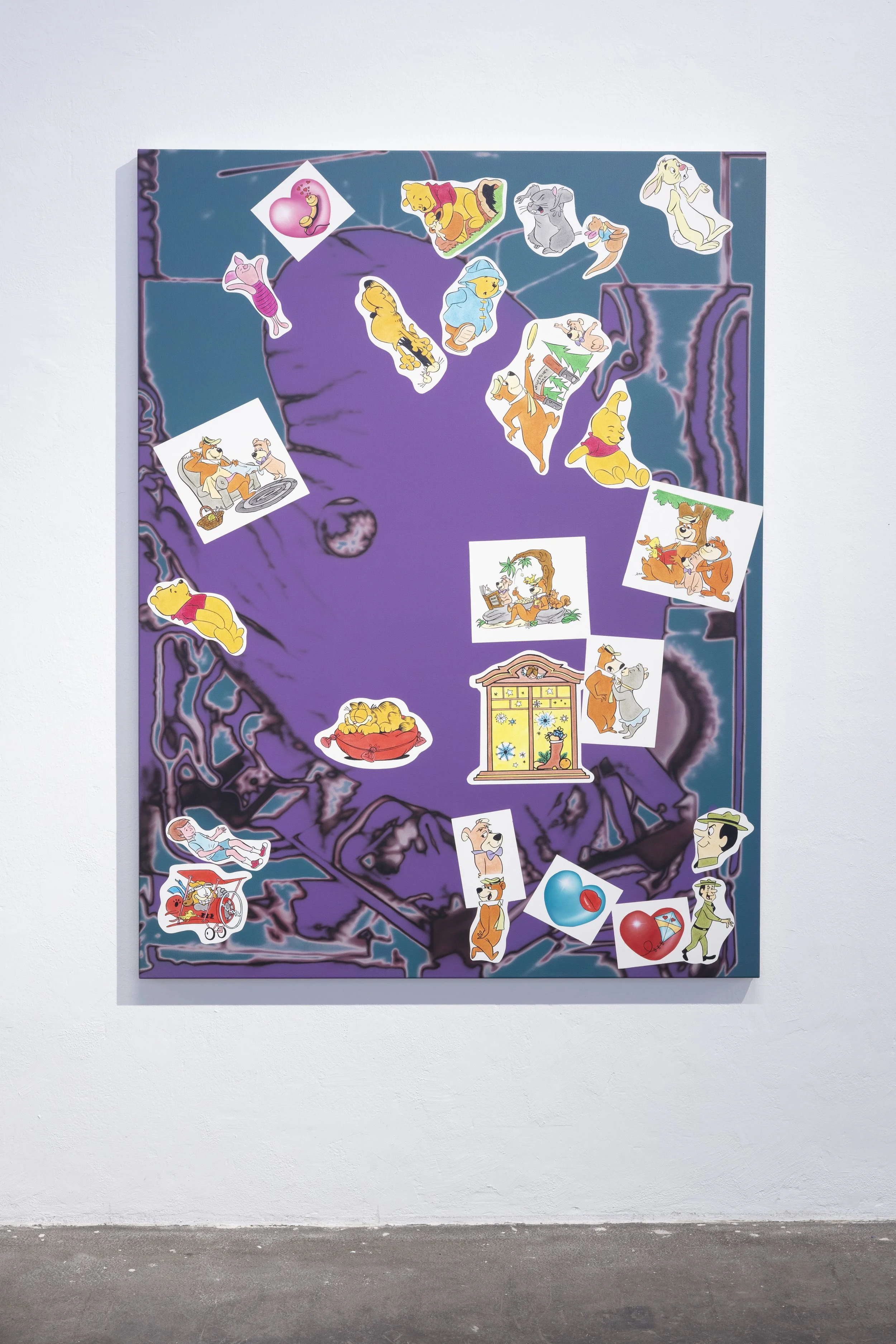
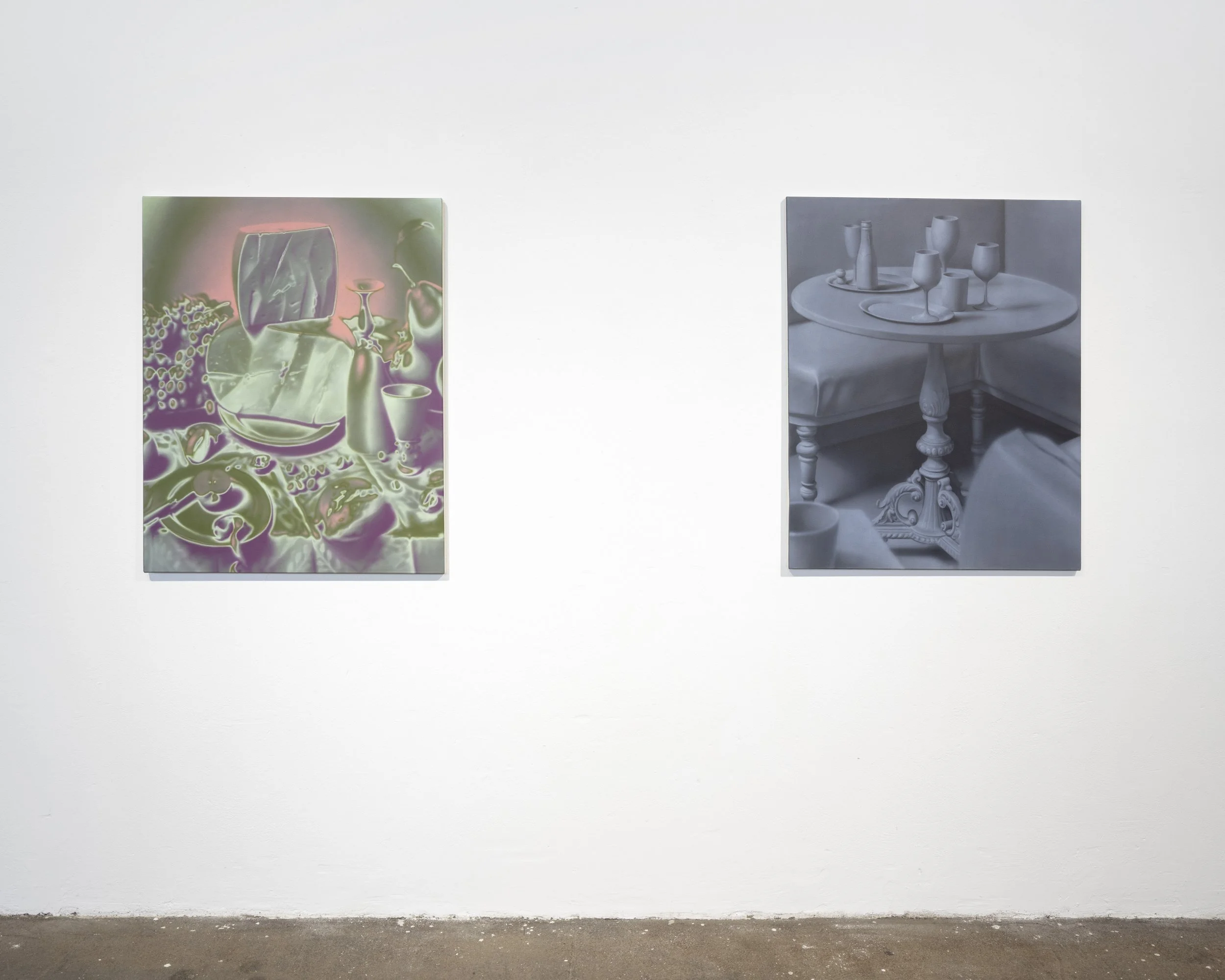
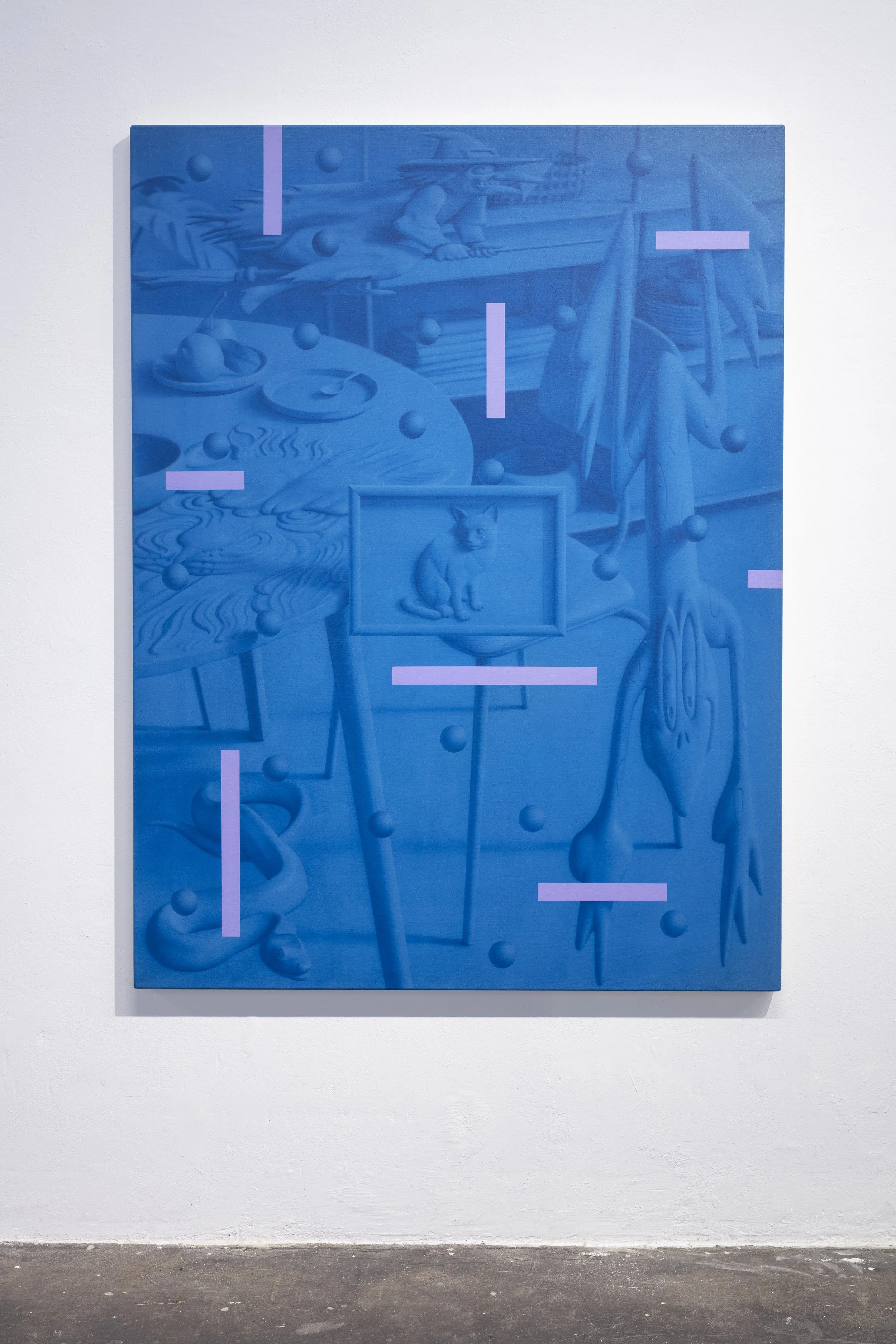
Set free within a loose net of valuation and recycling, we encounter Paul Riedmüller's (*1989 in Graz) inexhaustible world of images. In manifold chains of association, painted motifs of the most varied digital provenance line up and overlay one another. These at times colour-manipulated subjects, pairings and layerings make clear that after centuries of a canonised art history, and in the face of digital ubiquity, there is no motif left that mere selection could not render worthy of being pictured. In constant repetition, variation and also spontaneity, Riedmüller feeds AI hallucinations, 3D models and clip art into his chain of reuse, overlaying one layer of editing, meaning and chance with the next. This same logic returns in the exhibition's title, Rogue-lite. The term denotes a video-game genre whose premise follows the principle of so-called meta-progression: while every run begins anew, certain gains accumulate across the individual runs and make future runs stronger. The results of each run – or, for that matter, of each act of image-editing – condense into a new point of departure that carries within it what has already been achieved.
Our relationship to images has changed radically. Everything is image. And everything is worthy of being one. In our feeds, landscapes appear beside handbags, playing dogs beside the hottest food spots, knitting grandmas beside fragments of political debate. Markus Söder goes to the public pool, wildfires now rage in Central Europe too, heads of state stage themselves as Christ, AI slop shows dashcam footage of wild animals climbing into the toilets of forest cabins. The Pope wears a Balenciaga puffer jacket, Brooklyn Beckham cooks mediocre pasta, memes and GIFs are so ubiquitous that Susanne Daubner announces them as youth-word of the year on the Tagesschau, one turquoise-glittering-peach-garnished-sun-kissed-"without trendy audio"-tagged holiday video chases the next, and meanwhile the world is richer by an endless multitude of already-vanished eclipse photos. To speak of the sheer mass of images we expose ourselves to day after day – amused, entertained, shocked and exhausted – has itself long since become a cliché. And if the whole world is, first and foremost, image(s), the question arises what could still make one more image relevant at all. In the thick of this consequence, Paul Riedmüller makes seeming arbitrariness his premise. Out of a passion for the experience of seeing, he brings once-bodiless worlds back into a reality of objects.
"Duchamp did not fabricate the Fountain (the urinal). He designated it. Chose it. Points at it. […] Art moves from the hand to the mind. From making to naming. From craft to thought." – Jerry Saltz
For Marcel Duchamp, it was settled a good hundred years ago that choice (the act of selecting and naming) is the fundamental precondition of art. Beyond the "retinal" quality grasped by the eye (both look surprisingly pretty), it is decision as such that first raises a bottle rack or an upturned urinal into an artwork. This puzzling gesture prefigures, with surprising precision, a phenomenon that has long since caught up with our reality: the disembodiment of information and, indeed, of art – as present as it could ever be in a digital age. Paul Riedmüller lays claim to this thesis and exceeds it in the same breath. For now that the digital, post-auratic present has long since pushed Duchamp's thought to its extreme, Riedmüller reverses his movement and gives the bare thought, the pure information, a body once more. In doing so he imitates the digital by hand and unmasks it in the same move. What, as simulation, ought to conceal its own artificiality, he instead sets out in paint as image-reality.
Against the interchangeability and universal availability of the motifs, the artist here sets a decidedly bodily as well as time-intensive practice. For even every mouse click, in this postmodern muddle of semiotic arbitrariness, is a bodily one. The computer is not simply a mere calculating machine, a system of binary ones and zeros, but a tool for spontaneity and playfulness. Riedmüller estranges his motifs, tugs at them, overlays, colours and manipulates them in numerous ways, through which he comes to grasp the computer's tools as material. The translation of the digital source material into the analogue then takes place not as a print but in painterly handwork that simulates the digital, transfers it – analogue – onto canvas or wooden panel, and, in the beholding, provokes an irritation as to its own making. Riedmüller works, among other techniques, with an airbrush. This painting technique, which comes from the industrial realm, suppresses the artist's gesture in the application of paint and thus adopts the digital look of an image that is now, once again, a physical object. Built up digitally in separate layers, the motifs merge again, in the analogue application of paint, into a single plane. Over areas masked off with tape, Riedmüller lays layer upon layer, condensing and uniting them. Where the digital pixel once formed the smallest, exactly calculated unit of image information, in the analogue paint the boundaries dissolve: transitions become fluid, blur, the paint layers now diffuse, and image quality is carried over into the infinite.
What Paul Riedmüller brings onto the canvas in analogue form is often already a simulacrum: a copy without an original, an image whose referent was itself merely another image. The supposed original recedes into a groundless regress and ultimately amounts to a dizzying image of an image of an image, at whose origin lies no reality, but only the next simulation. Only the artistic gesture of selection arrests this undertow and brings the image back into reality – as an amalgam of the existing and of a technical, yet always also personal, appropriation. Central to Riedmüller's practice is a delight in the play of working with images – a fondness for their complexity.
In the veritable frenzy of these image-finding processes, it becomes clear that abstraction is possible even within figurative image material. The adoption of such a multiplicity of images becomes possible only through the dissolution of canon, of pictorial programmes and of unambiguous semantic attributions. A car today means many things: masculinity, techno-optimism, nostalgia, accident, film reference, desire, prohibition, political cause, status, and more. In a decade that must already have left postmodernism behind, everything can mean everything. Everything can even mean everything, everywhere, all at once. Through the almost anarchic approach of (no) imageprogramme, Riedmüller's works are thus always also images about images: about seeing, about our dealings with them, and above all about their only seemingly enduring exploitability. For what may once have been generated as a data stream no longer lives in the world of swipes, but stands as an object in space and now fascinates as an autonomous image.
– Niklas Koschel